a gathering place for the words, images and momentos of the world of adventures i've adventured, the stories i've wandered through. curriculum bella vita...a resume, of sorts, of the good life.
Showing posts with label traveling. Show all posts

Sunday, November 18, 2012

Thai thai thai!

I'm a little embarrassed it took me 22 months to get to Thailand. It's just a cheap, direct flight from here...but literally a world away. Happiness and hedonism and healthiness...not words you'd usually use with Hyderabad. Makes for a great destination, you'll definitely want to spend more than a week there.

I wasn't overly impressed with Bangkok, compared to the other cities i've been to of late. The metro is nice and the malls are fun, but the river cruises and monuments are only alright. The city itself didn't seem to have a distinct, unique culture to it. The new night market Asiatique was actually cooler than the ladyboy burlesque show. Highlights were a great (strangely enough, diwali) rooftop part and a great tour guide-ess helped us explore the city and find some good Thai food.

But the beaches, oh those beaches! This is the reason to go to Thailand. The most amazing coastal geography on this planet, lined with perfect beaches. We flew to Phuket Island, picking Kammala Beach as our destination of choice. A good combination of pretty and peaceful, but close to the chaos and color of Patong and the more happening hubs of southern Phuket. Best side trip? Ko Phi Phi. Incredible little island and great little town, definitely would recommend spending a few days there, rather than just taking the tour boat over for an afternoon.

The strangest thing, though? As beautiful as Thailand was -- and it's stunning -- i was rarely tempted to pull out my camera. Beautiful, just not as photogenic as my home for the past two years. so it goes.

Wednesday, September 19, 2012

Adventures in Sri Lanka

I was expecting, somehow, Sri Lanka to be a bit more "different" from India. It's more green, of course, and more peaceful...but really it feels pretty darn similar to Goa or Kerala in island form. First time I've ever seen Buddhism in tropical incarnation, but on the whole, it doesn't feel as culturally distinct as Nepal...or even Leh.

No direct flights from Hyderabad, have to connect in Chennai (or Madurai, from what i hear). The Colombo airport is old school, no way near as modern as most of the nice, new Indian metro airports. Same with roads, bus stations, train stations and the overall infrastructure. Taking the local bus was dirt cheap, but relatively more difficult to understand than in India. Bus station wasn't well labelled, nor was the staff able to help much, but i always managed to hop out at the right spot.

I had a hard time choosing between surf school and adventure camp for my short vacation, but i finally settled on three nights at Borderlands, a great little camp tucked in the foothills three hours east of Colombo. Great spot to raft, kayak, canyoneer, hike, read and relax, etc. Great food, too. I had hoped to meet some new friends there, but as it turned out, i had the place to myself. i did enjoy the company of the French guide and the local staff, though.

Back in Columbo for a night, the local train was a quick, easy and fun travel option. Mount Lavinia's the southern-most suburb of Colombo, a beachside neighborhood complete with little resorts and beach-side restaurants. Makes a great place to spend a day if you aren't able to get to the nice beaches further south. From the main/central/Fort train station, just take the southern line to Mount Lavinia until you find a passable place to spend the night or eat a meal.


Monday, September 3, 2012

Auranga-great

Great weekend CLO trip with ten folks to Aurangabad, just a short flight half the way to Mumbai. The city is a great jumping-off point for a great collection of sights in central Maharashtra. Nice new airport, convenient YellowTree with a pretty nice swimming pool...and believe-it-or-not India's largest mall!

Ajanta Caves

Daulatabad Fort

Bibi Ka Maqbara

Elora Caves

Wednesday, August 15, 2012

My Favorite Leh

Twenty months in, I have a new favorite spot in all of India...Leh!

Ladakh is a pretty special corner of India, the far extreme North, the mountainously beautiful and surprisingly peaceful part of Jammu and Kashmir. It's largely Buddhist, most closely related in culture, peoples, religion and architecture to Western Tibet.


Leh is the capital town of the region, a small burg of just 10,000 year round inhabitants, swelled with tourists four months out of the year (July-October) and blessed with the infrastructure (and airport) of a significant military base. Just ten years ago, India and Pakistan were fighting over the Kargil Glacier, hardly 100 miles to the west.

You can fly or bus into Leh. Flights from Delhi are convenient, if pricey, and they come with the added cost of immediate acclimation at 11,500 feet. I'd never done anything like that before, and it was more painful than I expected. The first night, especially, was miserable. Headache, loss of appetite, disorientation and insomnia. Almost bad enough to force me to get some non-prescription medication, but it passed before the end of the second day. The two day bus ride up from Manali or Srinigar help significantly with acclimation, but come at the price of a bone-jostling journey.

A 200 rupee taxi takes you to the city center, a wide-laned bazaar with great shops and restaurants. Every other storefront is a map store, outfitters or travel agency catering to visitors. From the small downtown, to the north, a 16th century Buddhist palace sits perched on a cliff. And to the west, a green valley pasture, criss-crossed with cobblestone walking paths and glacier-melt creeks, is speckled with more than a hundred different guesthouses, hotels and family stays. Glacier View Guest House gets a thumbs up, but you can't go wrong just walking the paths, finding one you like and inquiring about availability on the spot.

Leh offers many good day-hike options without even leaving the city: Shanti stupa, the palace, the donkey sanctuary. (The first two are better than the third.) The palace, in particular, is great. You can climb over, under and around the 9-story inward-leaning castle, modeled after more famous counterparts in Lhasa. It's easy to hire a car, too, for a full-day of monastary sightseeing along the Indus River.

Instead of sightseeing, though, I went rafting on my day outside of Leh. 1300 rupees will get you a three-hour raft down an amazing section of the Zanskar River, 45 minute drive from town, as it flows through beautiful canyon walls before dumping into the Indus River. It's pretty good whitewater and a great way to meet fellow travelers. Afterwards, you get a tasty lunch in the raft guides base camp.

Saturday, March 10, 2012

Delightful Dubai

Please welcome a bit of Dubai guest blogging courtesy of my hostess with the mostest, sha.


Monday, January 16, 2012

haulin' to hampi

What better excuse to finally get to picturesque Hampi than a visiting Chinese delegation and a three-day weekend. it makes for a tough over-night trip, but it's a fascinating glimpse into a long-fallen dynasty, an important part of the regional history.


Hyderabad to Hampi by hired car:
6 hours via the really nice highway to Bangalore, then cutting across at Gooty
7 hours when you take the straighter but slower route through Raichur
About $100 per person (6-person innova)


Best Praise: Barrett looked out over the landscape and said with a smile “This compares with Angkor Wot.” He backtracked slightly the next day, but I figure it’s strong praise that the comparison even entered the conversation.


Hop on the 20 rupee ferry across the river for your choice of many great little resorts with 1000INR rooms and restaurants that will gladly sell you beer. Lots of wandering hippies spending long chunks of time there.


It’s HOOOOOOOT in Hampi. Avoid summer, be prepared.

Tuesday, January 10, 2012

the romance of rajasthan

Jaipur's a great city to visit, i can see why it's one of the recommended stops on short stays in India.

The city center is a quick 330 rupee taxi ride from airport. The Umaid Mahal palace proved a pleasant place to stay, but a bit of a hike from the interesting places. Saturday, we headed early to the Amber Fort and Palace, a cool a place as India has to offer. An imposing massif straddling a strategic hillside, it's the india you see in books. Super cool history and amazing places to wander, even without a guide. By afternoon, our trusty tuktuk driver had us at the Dera Amer elephant safari, half-an-hour outside of the city limits. The ladies picked it as their giant splurge item in India, a $100 luxury that proved well worth it. From our sweet lime juice welcome at the gate to the final all-you-can-eat bonfire dinner, we savored live as prince and princesses. We bathed and scrubbed our new elephant BFF, the friendly Rangmala. Afterwards, we painted her snout before hoping aboard for an hour-long canter through the desert brush. Drinks and appetizers around a fire, even no-haggling shopping. It was a pretty awesome way to spend a day before crashing back at the hotel.

Sunday, we strolled through the old city, where the aging building facades are a pleasant sanstone with a tink of pink, giving the city its nickname. The city palace is uninspiring, but the Jantar Mantar astrological park is cool, but it doesn't make much sense without a guide. Hawa Mahal, though, is the perfect architectural gem to wander through and snap pictures from each and every angle. Dinner at Mediterrano, a rooftop Italian rooftop, offers great views and even, should you push, special tea.

But pound for pound, Udaipur might just be the most darn pleasant place i've been in India.

We took a night sleeper bus from Jaipur, just finding the right spot was a nerve-wracking exercise in clueless wandering that isn't recommended for the new-to-India. The ride, though, proved relatively cheap and relatively comfortable once we were shepherded into our compartments. By morning we were sipping drinks overlooking the beautiful Lake Palace and mountains beyond. The City of Lakes definitely has a unique feel to it amongst indian cities, and the streets are surprisingly walkable. Hotel Mandiram Palace was a great choice, but the best surprise was a tasty burrito dinner with a great view at 1556. The City Palace museum had me at wits end, but the boat ride out to Jagamandir is a perfectly relaxing way to go. The Udaipur airport's a bit of a drive from the city center, but it's quite nice and modern. A great landing point if you can catch one of the rare direct flights to/from Hyderabad.

Saturday, December 3, 2011

Nagarjunakonda Roadtrip

The list of things I miss about America is long. It's topped by Chipotle, of course, but somewhere not to far down the list you'll find "good ole-fashioned roadtrips."

Not too many "tourist destinations" within driving distance in this chunk of India. Guidebooks usually call Andhra Pradesh, in a variety of diplomatic phrases, something along the lines of a "subtle charmer." I've broken out on wheels just once, a bus trip to Laknavaramu with the Adventure Club. (Treks out to Bhongir only count as a mini-excursion, i've decided.) Atop my to-do list of regional destinations, higher than even noted Wall Drugs of the Deccan like Medak, Nizamabad, and Bidar, was Nagarjunakonda.

I got antsy sitting in Hyderabad since coming back from Nepal, so I convinced coworker Sarah* and new friends Aliza* and Mandy* to load up with Raghu and I and two burned CDs. We set out on the three-hour (150km) drive to Nagarjunakonda, a relatively pleasant drive down a relatively decent road.

The earthen dam itself is pretty impressive, and the reservoir'll the best looking body of water i've seen in months. I was allllllmost tempted to jump in. The valley was an international hub of buddhism back in the 200-300 AD range. The site was excavated in the 1930s, but was threatened when construction began on the dam in the 1960s. the ingenious solution? dig up the ruins and plop them on a hilltop, set to become an island in the new reservoir. The result is a pleasant island park, gardens and paths linking museums and reconstructed ancient buddhist structures. The one-hour ferry and entrance fee combine to about $5 a head, not an unreasonable price for a pretty pleasant out of doors experience. Worth the three-hour trip, if you've got time to kill in the Hyderabad metropolitan region. Two-and-a-half stars out of five.

* Denotes an awesome individual.

Monday, September 5, 2011

Rethinking China


Hong Kong to Guangzhou is a comfortable 2-hour train ride. But it’s not a normal train ride. It’s a bit like a train ride I took six years ago to Ukraine:

1. The heave-ho tension of feeling under-prepared to enter a foreign country. Stepping out of your comfort zone.

2. The flash of excitement – like crossing over into the former Soviet Union – of being some place where you’ve never thought you’d be...and for a long time felt like you couldn’t be and shouldn’t be.

But with a clickity-clack no different than all the other clickity-clacks on the two hour ride, we crossed over from the special autonomous zone of Hong Kong into communist China, whatever that tired label actually means these days. I’m a bit outdated on the political science behind Chinese communism, and I’m not quite sure what it will become or how it will affect the United States, but only two things really stood out during three days in China:

In China, Communism means a planned economy. It’s clear – I’d argue joyously – that there’s a little bit more thought going into China’s rapid modernization than India’s. The roads are wide and clear. Traffic is crowded but reasonable. The public transportation is well-linked. Right-angles exist. Parks, too. China is clearly a generation ahead of India in terms of infrastructure. (Even as India is an equal generation ahead of China in globalism and English language. I’d completely taken for granted that 75% of Indian visa applications apply in English while 95% of Guangzhou’s pool, it is said, apply in Chinese.) The economy is visibly booming. Young people in clubs radiate cash and excitement both. I walked away with a distinct feeling that it’s an exciting time to be Chinese.

And in China, Communism means control of information. Observation’s common, among Americans and locals alike. I didn’t notice anything abnormal during my visit, but that doesn’t mean there wasn’t an eye. The more everyday implication, though, is an absurd control of the internet. I tried to log onto Facebook? Nope. Blogspot? Nada. Twitter? No, thanks. Yahoo? No dice. Youtube? Wampwampwamp.

In short, I enjoyed China, the culture and the food far more than I ever imagined I would. For a dozen years, I’d held an unchallenged and fairly simpleton belief that I like India and don’t like China. Perhaps I was too moralistic in appreciating certain values over others. I might have been convinced during a second late-night snack, welcomed to sit at a table of ten young Chinese and share some sort of gobbley-gook local porridge, that China too is a land I could enjoy. Well, either that, or I was smitten by the sight of tank tops and skirts for the first time in nine months...

Friday, September 2, 2011

Hong Kong: Yes Please.


Hong Kong! Hong Kong! Hong Kong!

What a glorious, world-class city!! I’d never given it any thought before, but the city is spectacular!! The sea and the mountains side-by-side, one of my favorites. A glitzy but cultured downtown tucked right up against impressive peaks and lush jungle. A densely packed populance, but 70% of the small territory is wild and rugged. You can even backpack and camp in Hong Kong proper!!

Great to wander and chat with Barrett for a few days, and fantastic to stay with Stephanie, a world-class hostess. So fun to see the adventures and lives of A-100 classmates around the world in a 100 different jobs and places.

Culinary highlights: build-your-own-burger and Blue Smoke barbeque.

Nightlife highlights: requesting Rasputin at Big Al’s (and getting it!) and a coverband on Lan Kwai Fong Street.

Adventure highlight: hiking from Central to the Peak, a two-hour summit. It’s a thousand-foot elevation gain on beautiful, mostly-deserted trails.

Sporting highlight: enjoying Stephanie’s Armed Forces Network cable access to watch the Badgers pound UNLV in the season opener! Looks like Bucky and Big Red newcomer Russell Wilson are in for a great season!

Cultural Analysis highlight: tallying the amount of men, both local and foreign, walking along the Avenue of the Stars boardwalk with and without satchels. The final tally after a sample size of eighty? Fifty with, only thirty without.

Socio-Economic Analysis highlight: probing friendly Filipinas – with questions, mind you – and missing the train to China due to an early-morning breakfast and subsequent monsoon. Oops...

Wednesday, August 31, 2011

Long Gone Hong Kong

Today's Ganesha day! Tomorrow's Eid! Monday's Labor Day!

So J. Jewett's off to China!


Saturday, August 6, 2011

How to Houseboat the Backwaters of Kerala

You could argue all day long about how there's nothing "authentic" about houseboats and "God's Own Country," Kerala, but that hardly matters. It's a great way to savor an amazing piece of the Indian experience. Imagine floating carefreely through a system of backwater canals mapping out an infinite number of paths through beautiful rice paddy countryside. Yup, that's exactly how JDB and I spent our friendship honeymoon.

As beautiful as the scenery is, though, the chance to peek into village life along the canals is even more fascinating. 75% of the passage is lined with houses, you're free to observe traditional living with a smile and a wave. Every house has a small boat and a small ghat of steps down to water level, it's the center of life of the community. People bath in the river. People brush their teeth in the river. People wash their pots in the river. People herd their ducks in the river. People ride the watertaxis and water-school buses. It's beautiful to watch. (Although in truth you do need to bring a book if you go for more than one night.)

Getting There:

Rent a car from the Kochi airport or Kochi city center. Expect to pay about 1200-1500 rupees for the 1.5 hour ride.

Getting a Houseboat:

One possibility is booking a houseboat online, there are a variety of websites offering a wide range of boats/trips. Another option is to arrange a houseboat through your Kochi hotel. We turned down 5500 boat offered by hotel because we wanted to see the options and we thought it would be easy to do in the low season.

We hired a car to take us to Alleppey, and the driver offered a connection on the ride. We ended up on his friend's boat, 6500 rupees for a well-equipped one-bedroom AC houseboat. Tougher than expected to bargain at the site, because the boats were not at a centralized location due to upcoming snake boat races. Price includes staff of three, all meals, bottled water, etc. Expect to pay 100 rupees per bottle of piss beer unless you plan ahead and bring your own.

Bring bug spray and suntan lotion. Paths along the river are muddy, bring sturdy sandals that can get dirty. Bring books, paper and pen. In fact, bring extra pens, as kids like them.

Highlights:

Delicious Keralan food, prepared fresh three times a day, plus snacks. Jen enjoyed the veg entrees, I liked the fish.

Hiking along the riverbank after docking for the evening, a 30 minute stroll north of St. Thomas church. Making friends with precocious children, who were in the market for one pen.

Stopping for a lunch break in provincial Champakulam, giving ourselves a VIP tour of the local hospital, St. Josephs Mission Hospital.

Postcards from picturesque post offices.

Finishing a book about Custer.

Monday, August 1, 2011

Planning for China

It’s nerve-wracking being a visa applicant!! Where are the clear directions?! Why do different websites say different things?! What documents do I need to submit?! What documents do I REALLY need to submit?! Who can I turn to for advice?!

Akh, I see now why people complain so much about visas.

Monday, May 30, 2011

BANG Galore

You've heard of Bangalore; it's hip.

Thomas Friedman's got a man-crush on Bangalore. And who doesn't respect whatever Thomas Friedman thinks?

But it's not so happening. Bangalore might well be an important "concept" and a quite livable city, i'm here to tell you that Hyderabad is the much better place for a visit. Bangalore, simply put, must be the most boring city in India.

The great course of history that has speckled Indian cities and countryside with the most amazing palaces, forts and temples in the world somehow skipped over Bangalore. Zilch. Nothing to see. Nada. The historical capital of Mysore has the palaces. Srirangapatnam has the fort. And Bangalore's temples are nothing of note compared to the rest of the Karnataka cities.

For two days, Elvin and I wandered the city, expecting untold glories, but finding -- in short -- "pleasant but less than satisfying." a leafy city with broad lanes and wonderfully temperate daytime highs. a green but less than great rose garden. a disappointingly short main commercial street. a few welcoming pubs. a relaxed ex-pat community of software/business professionals, very much more european than american. a pleasant 13th-story restaurant with good views of...a vaguely suburban city with not much of note. sure, you could see the height of the Electronic City off in the distance, but little else of note.

Through Sunday evening, we were a little low on the city. That all changed when we navigated our way to the closer of the city's two Taco Bells. The only two Taco Bells in India, new in 2010. Now, I've only been to Taco Bell twice in my entire life, but when the nearest Chipotle is in London, England, you take what you can get.

And the getting, in all honesty, was phenomenal. A delicious burrito meal. One of the best $3 purchases I've ever made. We grinned in delight, savoring each bite, certainly a site to see. The Indians were suspicious. We asked the manager when they'd open a restaurant in Hyderabad. First, he said, Mumbai. Then Delhi. Then Calcutta. Finally Hyderabad, only before Chennai. We weren't satisfied with the answer, and while eating our second burrito, we filed out comment cards demanding immediate franchising to HYD.

And later that same evening, Bangalore's second redeeming quality: Opus. We got a recommendation from a party planner, and debated not trekking half way across the city after she called to say she wasn't planning on going any more. More than glad we did, though, as the Sunday night sing-along kareoke dance party was the happiest thing i've seen on this subcontinent.

An industrial cum retro venue, ala any of Budapests fun new bars, tucked in a random pocket of the city. a great line-up of well-selected and familiar kareoke songs, sung by a variety of ages -- from 7 to 70! and a better gender ratio than any place i've seen in india. and cheaper-than-average beer! and more ghoras than they'd see anywhere outside of a consulate staff meeting! The only downside at all? Karnataka's state-wide 11:30pm shut-down time. Sucks.

Elvin and I had no choice but to continue the kareokeing the next morning in the hotel lobby.

Saturday, May 28, 2011

Night Training

(For your listening enjoyment while reading this post.)

Rickshaws carry a certain catchet in these parts, but no mode of transportation has moved as many people for so long a time on the subcontinent as trains. India and overloaded trains, the images are almost cliché, people half-falling out of every door, brimming over the traintop, even.

It’s something but you’ve to do while you’re here...riding an Indian train.

But it’s harder than it seems. Trains are often sold out a month or more ahead of time. There are literally a billion people that you’re competing with for train seats. And this time of year – april and may – is the busiest, as students and families are traveling. I’m used to Hungary, where you could hop on to almost any train at the last minute. Just show up at little Heves station and buy your cardboard ticket. you could even buy the ticket once onboard.

After a month of search, finally a lead: some trains have a “foreign tourist” reservation. 2-6 seats reserved for foreigners only, even if it comes at a slightly higher price. Elvin and I wisely brought Raghu with us to pre-purchase two tickets from Hyderabad to Bangalore. Even with a local pointing us in the right direction, the process still took 30 minutes. The highlight?

Jeremy: Hi, we would like two “foreign tourist” tickets to Bangalore.

Clerk: I’m sorry. Students can’t get the foreign tourist reservation.

Jeremy: Aaaaaaaaactually, I’m a diplomat.

Friday after work, Raghu dropped us off at the Secunderabad station with a “good luck.” The station, as to expected, was packed with thousands of travelers. Entire family groups, huddled around mounds of luggage. Entire villages, it seemed, en route from somewhere to somewhere else. We were a bit conspicuous, dragging our rolling suitcases. There were no other ghoras involved in this activity.

We found our names on the reservation list, along with our berth numbers. The first time I’ve ever seen my named written by someone else in either Hindi or telugu. The pronunciation they chose? Jah-reh-me. My name worked better in Hindi script than Elvin’s though, strangely enough.

After we crossed over all 10 tracks, we sat down in the long-distance train terminal, a much more comfortable sitting place than the other half of the train station. Ten minutes later, including of course a stray dog pooping in the middle of the terminal, our train – the Bangalore Rajdhani Express – pulled into the station. Every day, a train starts the two-night journey from Delhi to Bangalore, and vice versa, carrying a thousand passengers all or part of the way between the middle of North India and the middle of South India.

After figuring out the right door, we hopped aboard our car. This was not the train I’d remembered from Hungary. A whole nother narrow row of bunks cramped the skinny walkway. Brown faces of all ages peeked out from behind thin curtains with curiosity, I smiled back.

We shimmied our way to our seat. Or what I thought was our seat. But here I was confused. Why were there already four people sitting in our berth? I rechecked the number, confirmed it, through my suitcase on the top and walked away, assuming that the problem would resolve itself – as they so often do if you just give it time.

A minute later, I came back. Elvin was sitting between two burly men. “They said they’ll move,” he said with a shrug. I sat on the hard bench, pulling my knees into my chest, trying to make myself as small as possible. I wasn’t so sure anymore about the whole night train thing.

Five minute later, as the engine horned an about-to-leave warning, the men stood up. One reached next to him, one reached under the bench. Nonchalantly, they pulled machine guns out of dark corners and walked out without a sound. I gawked in shock. They turned the corner, I looked at elvin, that’s just happened?

(You probably need a new song for the soundtrack by this point, don’t you?)

We settled in as the train jerked out of the station. One berthmate, headed back to his aeronautic engineer job in Bangalore read on the top bunk. The other, on his way back to school, shared episode after episode of How I Met Your Mother with us on his laptop. Both had boarded the train, a full day earlier in Delhi and were set for night two aboard the same train without debarking.

Highlight: free on-board meal was quite palatable...with no adverse consequences!

Lowlight: it was almost dark by the time we pulled out of the station, no countryside sightseeing.

Highlight: “Western” and “Indian” bathroom facilities!!

Lowlight: No foreigner reservations in First Class.

Highlight: Air-condition was almost too cold!

Monday, April 25, 2011

Make Mumbai Happen

Mumbai sprawls. The airport, in the middle of a huge swath of residential buildings, is an hour drive north of the South Mumbai city center. The drive’s amazing, the whole gamut of sights: the newest hotels and businesses, quiet residential enclaves, and circling them both, massive slums. Everything you’ve ever heard or thought of Mumbai, Bombay, is true. It is a city of world-class extremities, for better and worse.

THE WAY

1 hour flight from Hyderabad, about a $100. A 15-hour night train is an option, but you’ve gotta book trains way in advance in these parts. I wouldn’t recommend the March-August season, as it’s steamier than steamy. Temperatures are about the same as Hyderabad, but the humidity makes it seem much sweatier and way more uncomfortable.

STAY

Cheap guesthouses are plenty and not uncomfortable in COLABA, close to the highest concentration of sights and sounds. Travelling with budget-backpackers, we stayed in a tiny A/C room for 1600R a night ($40) along the Colaba Causeway. You’d also be comfortable along MARINE DRIVE, overlooking the Arabian Sea.

PLAY

The heart of the city is a fantastic blend of domineering colonialism and a fancy but fading sort of art deco. Tree-lined sidwalks like much of the touristy areas, a wonderfully welcome taste of visiting a European. It's so reassuring, in fact, that i walked away with the impression that this was a city that you could actually settled down in as a westerner and feel...comfortable. Some of the highlights?

Gateway of India and Taj Hotel – hustling, bustling city center. As lovely as it is crowded. And a living testament to India’s resilience after the 11/26 terrorist attack at the spot two and a half years ago.

Prince of Wales Museum – neat displays in an even more spectacular building

Victoria Terminus – One of the most photogenic, busiest train stations in the world. Another victim of ueber-nationalistm, now Chattrapati Shivaji Station.

Café Leopold – earns its reputation for being a fun, flirty place for tourists and NRIs to eat and drink and be merry. Stayed open until 2, which is waaay late for these parts.

The Oval –see cricket in action, hundreds of games overlapping in the same grassy patch surrounded by cathedrals and towers.

Bakeries - What a novelty!!! And donut shops, too!!!

Floating Mosque – Mumbai in a nutshell: scenic and shocking at the same time, an oasis of serenity, but only after you make it through a gauntlet of hawkers and beggars.

Dhobighat (Mahalaxmi Station) – see the innerworkings of the world’s largest washing machine: an entire neighborhood of dhobivallahs washing a city’s worth of laundry the old fashioned way.

Taxis – black and yellow little Ambassadors are the best way to see the city

Gandhi Bhavan – Mumbai’s quiet, leafy residential neighborhoods around Malabar Hills are worth a peek, and the Gandhi Musuem’s a great way to see that area and check out the room where Gandhi spent many of his pre-Independence nights.

And, of course, a more recently famous “bhavan,” the world’s first billion dollar home, Ambani’s 27-story tower.

Sunday, March 27, 2011

When to Plan YOUR India Trip

Now, I haven't lived in India for a full calendar year yet, but borrowing from a variety of sources, the best time to plan a visit to Hyderabad -- and most other parts of India -- is October through February, although you can usually get away with March and September, too. Weather should be a factor in your travel plans. April and May, go the rumors, are too hot to be pleasant. June, July and August are that unpleasant combination of hot and wet. Steamy. Blame the monsoons.

But depending on what you'd like to see/do, there might be more specific suggestions:

Sightseeing in Northern India's "GOLDEN TRIANGLE" (Delhi, Agra and Jaipur)

If you want to hit the Taj Mahal, the ancient and modern palaces of India's capital and Rajistan's beautiful desert capital, plan to avoid the hottest months of the year, unless 50 degrees celsius is your thing. The "winter" months of November through February are most pleasant.

Hiking in the HIMALAYAS

From west to east: Jammu and Kashmir* (Srinigar), Ladakh (Leh), Himachal Pradesh (Dharamsala, Simla), Nepal (Katmandu), Sikkim* (Darjeeling), Bhutan*, Arunachal Pradesh*

* Some restrictions apply.

In Ladakh, weather is extreme. Think Colorado, except next to Kashmir. Most passes don't open in late June. Summer season for hiking is July and August. Autum trekking extends from September to the first half of October before it gets too cold again.

If you're hiking out of Darjeeling or into Sikkim, plan around the monsoon. Spring hiking is possible between March and May. Fall hiking is possible in October through December.

Relaxing along the coast and backwaters of GOA & KERALA

The beaches of Goa are best savored between October and March. April through September just aren't as pleasant.

Keralan houseboats are good any time of year except the June and July monsoons. The peak season is the December through February winter.

Saturday, March 26, 2011

How to Get a Visa to India

It should come as little surprise that the Indian embassy as outsourced much of its visa processing. Luckily, Travisa makes the entire process pretty easy at their website.

Americans can get a visa to India in 6-month, 5-year or 10-year increments. The later two, of course, cost a bit more: $73 versus $163. A visa gives you permission to enter a country – so don’t get a six month visit more than six months before you intend to travel or you’re out of luck! Once you’re at the border, they’ll give you up to six months (180 days) to enjoy the country. If you leave and want to come back, you have to wait two months, unless you get a permit* or carry a careful itinerary**.

* Sounds like it’s asking for a bribe...

** Sounds like it invites trouble. I’ll relay information if I hear of anyone making a successful excursion, for example, to Katmandu during their visit to India.

In short, you complete an online application and mail four documents to Travisa, which relays the package to the Indian consulate in Chicago (assuming you live in Wisconsin): a valid passport with at least 6 months remaining, two pictures, a photocopy of your birth certificate and a photocopy of a document that serves as proof of address. Two weeks or so later, you get your passport back with a nice shiny Indian visa in it.

You can also apply in person and get a visa later that day, if your trip to Hyderabad is THAT pressing...

Monday, February 21, 2011

Go to Goa

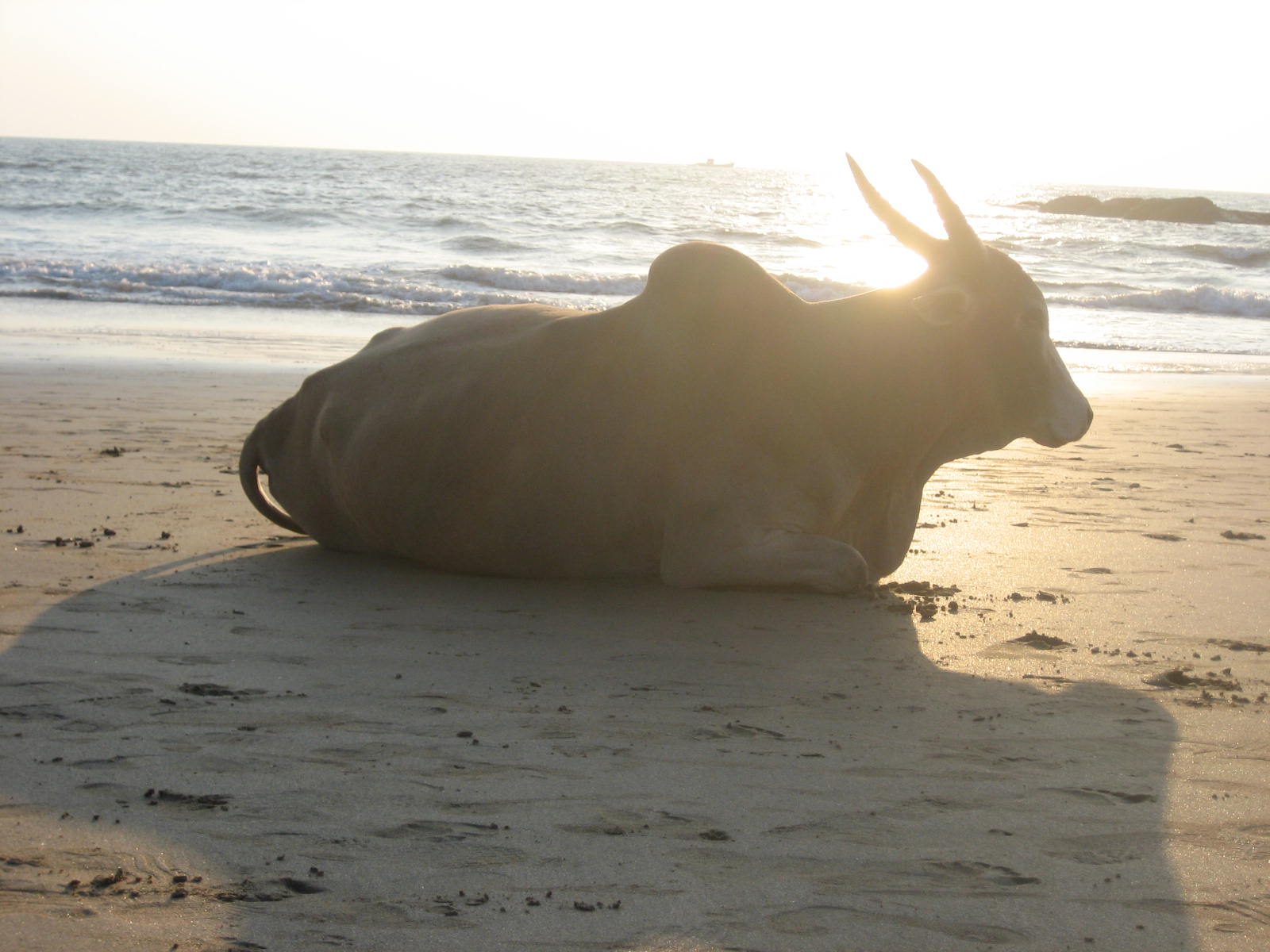
Go to Goa. It’s like the Caribbean, except with all the flavour that makes India so much fun.

Goa is a 2-hour flight from Hyderabad, roundtrip prices run between $100 and $150. Unfortunately, the schedule is rather lame. Two flights usually leave HYD to start the trip to Goa and back each day: one at 2:30 pm and one at 2:45 pm. They both land back in Hyderabad on the return trip a little before 7 pm. Train is not an effective alternative.

Once you land at the bus-station-like airport in central Goa, you’ve got your choice of heading to the beaches in the North or the beaches in the South, a delightful dilemma. The north is regarded as a little quieter, south a little more touristy. In the middle, a few cities much quieter than most of India, as well as the ruins of Old Goa, which once rivals Lisbon as the greatest city of the Portuguese empire at its peak.

We had a reservation at a beach in the south, just one beach north of the very last Goan beach. An air-conditioned cab for the hour-long ride cost about $30 for all four of us.

We arrived at Agonda Beach to find our reservation cancelled, but the staff helped us find a new pair of huts along the beach that worked just fine. Cuba was even a bit cheaper than the original H20 Agonda. For $50 worth of rupees, you get an air-conditioned hut with mosquito-netted queen-sized bed and attached bathroom. Showering next to the toilet only increases the charm.

Agonda Beach is typical of the smaller beaches. During the day, tourists – mostly European – enjoy the sun, sand and surf. Indian visitors are the exception. Quaint beach huts, separated by Goan restaurants, line the beach. Across the one street in town, villagers run little shops out of their homes.

We rented mopeds - $5 apiece for 24 hours – to explore the area on our second day. Palolem Beach, 10 km south, is the last of the Goan beaches. It had a distinctly more crowded feel, and we left not long after we arrived. It’s worth a visit, but it’d be a less relaxing stay than Agonda Beach. 12 km north of our beach, we also explore the ruins of Cabo de Rama, a once-proud Portuguese fort high atop bluffs overlooking picture-perfect bays. The views are stunning, even if the history isn’t well documented at the site.

But the flavor of Goa makes it stand out in India. Portuguese colonialism took a much different shape than British colonialism. The Portuguese were far more interested in converting their domain, the result is a high Catholic population. Old catholic churches are the center of life in each town. Saturday weddings look pretty much like those back home. Kids play soccer in the street, not cricket. There’s no curly-wirly local language on signs. There’s no excise tax on liquor. And evening church recitals include the Ode to Joy polka. This is one fantastic land of goodness. Looking forward to exploring more.

Monday, February 15, 2010

Portability

FYI - AirTran allows manual typewriters as personal items. Expect, though, cat-calls from security staff, especially re: the availability of ribbons.